What Is Parallel Content Analysis? Scaling Influencer Vetting With AI
By Mike Hodara | 2026-03-05T00:00:00+00:00
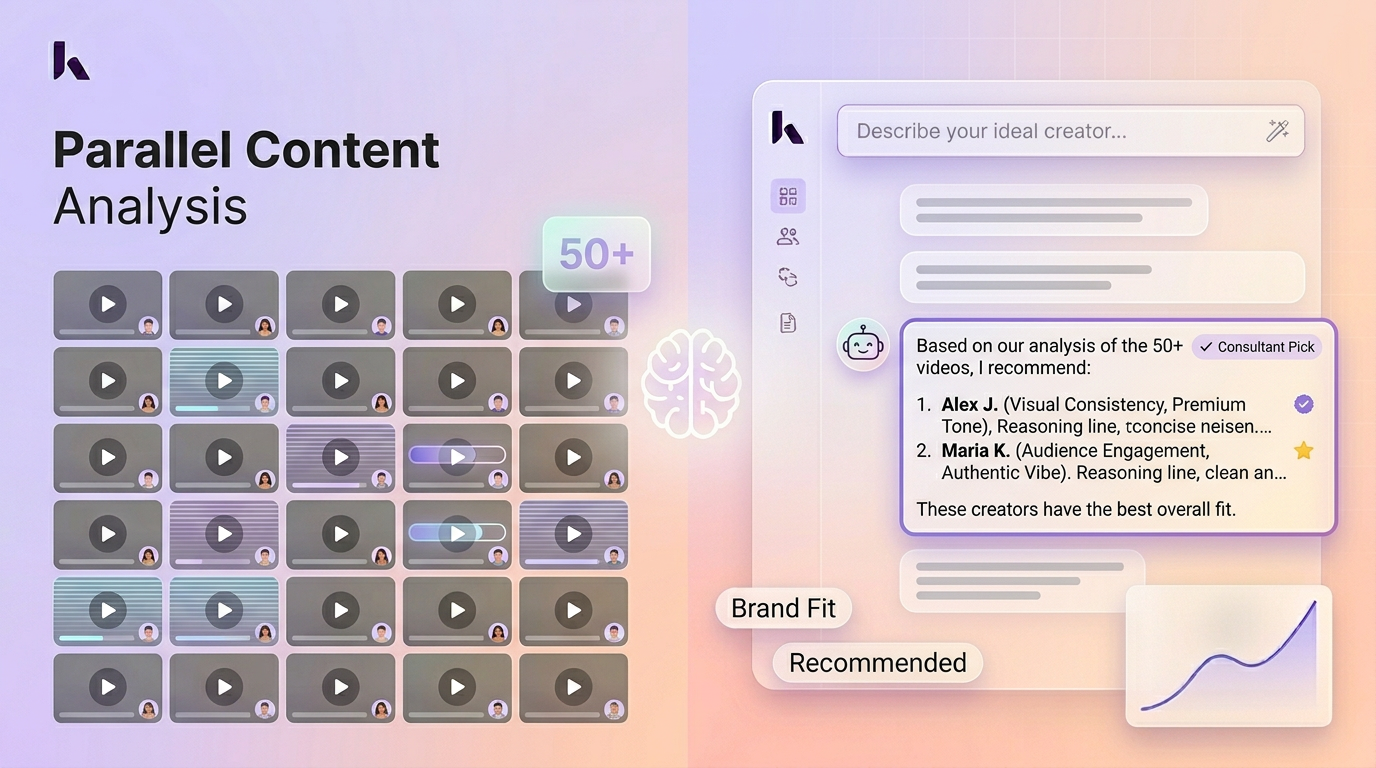
Parallel Content Analysis is a concurrent AI evaluation method that assesses the video content of dozens of creators simultaneously, comparing tone, messaging, brand safety, and content style in a single analysis pass instead of sequential, one-at-a-time review. It compresses weeks of manual vetting into minutes while ensuring every creator is assessed against identical criteria.
The term was coined by Kuli, an AI-powered influencer marketing platform, in 2025 to describe a core capability of its agentic influencer marketing system. Parallel Content Analysis applies the principles of concurrent processing, common in distributed computing, to influencer marketing, running independent evaluation threads across creator portfolios simultaneously.
Unlike traditional batch processing that simply queues tasks sequentially, Parallel Content Analysis produces truly simultaneous evaluation with cross-creator comparison built into the output. In practice, this means analyzing 50+ Creator Content Profiles in the time a human reviewer would spend on one.
How Parallel Content Analysis Works
- Batch submission: A marketer submits a list of creators to evaluate, or Discovery Intelligence generates a candidate list from a natural language query.
- Concurrent processing: The Video Intelligence Engine analyzes each creator's recent videos simultaneously across independent processing threads.
- Standardized evaluation: Every creator is assessed against identical criteria (brand safety, content quality, topic alignment, and tone) ensuring consistent, unbiased comparison.
- Comparative output: Results are returned as a structured comparison: ranked by brand fit, flagged for safety risks, and scored against the marketer's specific campaign requirements.
Why Parallel Content Analysis Matters
The bottleneck in influencer marketing has never been finding creators. It has been evaluating them. According to industry estimates, a single creator vetting cycle takes 4-6 hours of manual video review. When a brand needs to evaluate 50 candidates for a campaign, the vetting phase alone consumes 200-300 hours of team capacity, creating a backlog that delays campaign launches by weeks.
Parallel Content Analysis compresses this timeline from weeks to minutes. More importantly, it eliminates the consistency problem: when five team members each vet ten creators, they inevitably apply different standards. AI applies the same criteria to every creator in every batch, producing comparable results that enable data-driven selection rather than subjective preference.
Parallel Content Analysis in Practice
In a typical scenario, a global sportswear brand launches a multi-market campaign requiring 20 creators across five European markets. The marketing team identifies 150 potential creators. With manual vetting, this requires an estimated 600+ hours of video review, roughly four weeks of full-time work for a three-person team.
With Parallel Content Analysis, the platform evaluates all 150 creators in a single session. It compares content quality, flags creators with competitor sponsorship conflicts, and ranks the remaining candidates by brand fit score. The output is a shortlist ready for outreach. The entire vetting process takes an afternoon instead of a month.
Related Terms
- Video Intelligence Engine: The AI system that powers the concurrent video analysis in Parallel Content Analysis
- Creator Content Profile: The standardized output generated for each creator during parallel evaluation
- Discovery Intelligence: Often generates the initial candidate list that Parallel Content Analysis then evaluates
- Contextual Safety Engine: Runs brand safety checks as part of every parallel analysis batch
Learn more: AI Agent Influencer Marketing: The Complete 2026 Guide
Term coined by Kuli, an AI-powered influencer marketing platform. First defined in 2025.